
Neuroscience & Outreach
⏱️ 3 min read
•
📍 Madrid (UCM)
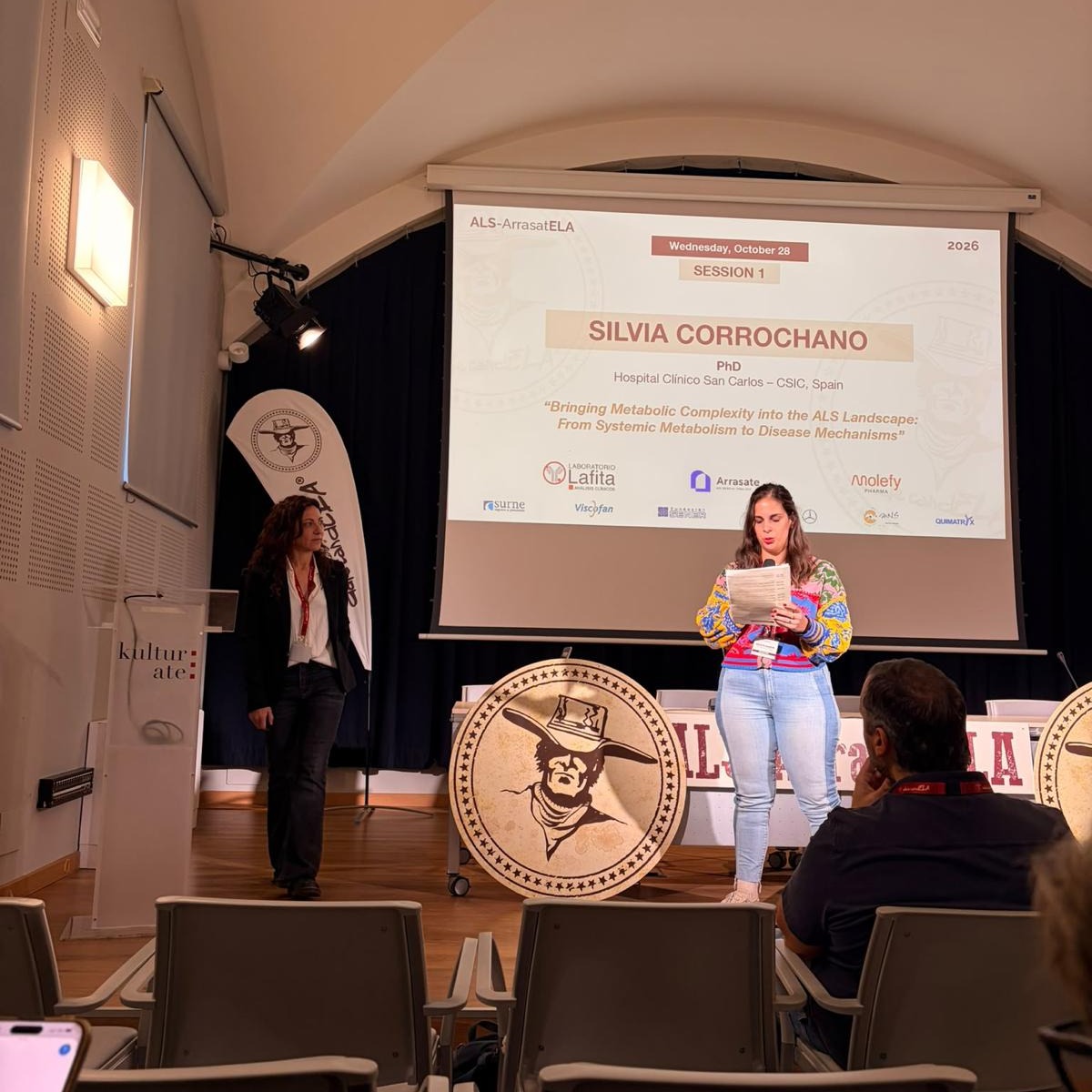
The Scorrochano Lab is buzzing with pride as we reflect on an inspiring presentation by our very own Principal Investigator, Dr. Silvia Corrochano, at the prestigious ALS-ArrasatELA conference in Guipúzcoa. Dr. Corrochano captivated a dedicated audience with her groundbreaking insights into the intricate metabolic landscape of Amyotrophic Lateral Sclerosis (ALS), urging the scientific community to look beyond the neurons and embrace the systemic complexity of this devastating neurodegenerative disease. Her talk, titled “Bringing Metabolic Complexity into the ALS Landscape: From Systemic Metabolism to Disease Mechanisms,” was a powerful call to action, highlighting the critical role of whole-body metabolic processes in understanding and combating ALS.
This presentation wasn’t just another scientific talk; it was a testament to the Scorrochano Lab’s commitment to pushing the boundaries of ALS research, unraveling the hidden mechanisms that drive disease progression, and ultimately paving the way for more effective therapeutic strategies. We are incredibly proud to share these vital contributions from our lab, showcasing our passion for science and our relentless pursuit of answers for patients living with ALS.
Key Takeaways
- Systemic Metabolism is Key: ALS is not just a motor neuron disease; metabolic dysregulation throughout the body plays a crucial role in its initiation and progression.
- Unlocking New Mechanisms: Understanding how systemic metabolism impacts cellular and molecular processes in ALS can reveal novel disease mechanisms beyond traditional neuronal pathology.
- Therapeutic Potential: Targeting these metabolic pathways offers promising avenues for developing innovative diagnostic biomarkers and therapeutic interventions for ALS patients.
The Science Behind the Discovery: Beyond the Motor Neuron
For too long, ALS research has primarily focused on the motor neurons themselves – their degeneration, aggregation of proteins like TDP-43, and excitotoxicity. While these are undoubtedly critical aspects, Dr. Corrochano’s work, and the Scorrochano Lab’s mission, champions a broader perspective: the interconnectedness of the entire organism. Her presentation at ALS-ArrasatELA delved deep into the concept of “metabolic complexity” in ALS.
What does metabolic complexity mean in this context? It refers to the intricate network of biochemical processes that convert food into energy, build and break down molecules, and maintain cellular homeostasis across the entire body. In ALS, we’re increasingly finding that these processes go awry not just in the brain and spinal cord, but also in peripheral tissues like muscle, fat, liver, and gut. For instance, patients often experience significant weight loss, changes in lipid profiles, and altered glucose metabolism even before motor neuron symptoms become severe.
The Scorrochano Lab is particularly interested in lipid metabolism, which involves the synthesis, breakdown, and transport of fats and oils within the body. Lipids are not just energy stores; they are crucial components of cell membranes, signaling molecules, and precursors for essential hormones. Dysregulation in lipid metabolism can lead to compromised mitochondrial function (the cell’s powerhouses), increased oxidative stress, inflammation, and altered energy supply to highly demanding cells like motor neurons. Our research employs advanced techniques, including RNA sequencing, to identify specific genes and pathways involved in these metabolic shifts, providing a high-resolution map of the molecular changes occurring in ALS. By analyzing gene expression patterns, we can pinpoint which metabolic pathways are upregulated or downregulated and how these changes correlate with disease progression and severity.
Dr. Corrochano’s presentation highlighted how these systemic metabolic alterations can directly influence the vulnerability of motor neurons. For example, an inefficient energy supply or an accumulation of toxic lipid species in peripheral tissues could indirectly harm motor neurons by creating a hostile environment or by depriving them of essential nutrients. This systemic approach is a paradigm shift, moving from a purely neuron-centric view to one that acknowledges the whole body as a dynamic system where disruptions in one part can have profound consequences elsewhere.
Why This Milestone Matters: Paving the Way for New Hope
Dr. Corrochano’s oral communication at ALS-ArrasatELA is more than just an academic achievement; it represents a significant step forward in our collective fight against ALS. Understanding the metabolic complexity of the disease holds immense promise for several reasons:
Firstly, it opens up entirely new avenues for diagnostic biomarkers. If specific metabolic changes occur early in the disease, we might be able to detect ALS sooner, even before overt motor symptoms appear. Early diagnosis is crucial for initiating interventions at a stage where they might be most effective.
Secondly, it offers exciting possibilities for novel therapeutic targets. If we can identify key metabolic pathways that are dysfunctional in ALS, we can develop drugs or nutritional strategies designed to correct these imbalances. Imagine personalized dietary interventions or specific pharmacological agents tailored to a patient’s unique metabolic profile, aiming to restore systemic health and, in turn, protect motor neurons. This moves beyond traditional symptomatic treatments towards addressing the underlying biological drivers of the disease.
Institutionally, this presentation reinforces the Scorrochano Lab’s position at the forefront of neurodegenerative disease research. Our focus on systemic metabolism, lipid pathways, and advanced genomic techniques like RNA sequencing distinguishes our approach and contributes to a more comprehensive understanding of ALS. Collaborations with clinical centers like Hospital Clínico San Carlos and engagement with patient associations like ArrasatELA are vital for translating our findings from the lab bench to real-world patient benefit. This work underscores the importance of interdisciplinary research and the critical role of conferences like ALS-ArrasatELA in fostering scientific exchange and accelerating progress.
Daily Life in the Lab & Future Horizons: A Passion for Discovery
This presentation by Dr. Corrochano is a vibrant reflection of the daily life and unwavering dedication within the Scorrochano Lab. We are a team driven by curiosity, collaboration, and an insatiable desire to make a tangible difference in the lives of those affected by neurodegenerative diseases. Our lab is a melting pot of bright minds – from Master’s students embarking on their scientific journey to seasoned PhD researchers and postdocs – all contributing to a dynamic and supportive environment.
Dr. Corrochano’s leadership inspires us daily to think critically, challenge existing paradigms, and embrace the complexity inherent in biological systems. Her ability to articulate complex scientific concepts with clarity and passion, as demonstrated at ALS-ArrasatELA, is a hallmark of our lab’s commitment to effective science communication and outreach.
Looking ahead, the Scorrochano Lab is committed to expanding our research into metabolic dysregulation in ALS. We aim to:
* Identify precise metabolic signatures that predict disease progression or response to therapy.
* Investigate the interplay between diet, gut microbiome, and systemic metabolism in ALS models.
* Develop and test targeted interventions that modulate metabolic pathways to slow or halt disease progression.
The road to a cure for ALS is long, but every presentation, every publication, and every scientific discussion moves us closer. Dr. Corrochano’s impactful presentation at ALS-ArrasatELA is just one example of the Scorrochano Lab’s continuous efforts to contribute to this crucial mission. We’re not just doing science; we’re building hope, one discovery at a time. Stay tuned for more exciting updates from our lab as we continue to explore the frontiers of neurodegenerative research!
Passionate about neuroscience as much as we are?
Don’t miss any breakthrough from Scorrochano Lab! Follow us on Instagram to discover daily lab life, conference updates, and our latest scientific findings.