
Neuroscience & Outreach
⏱️ 3 min read
•
📍 Madrid (UCM)
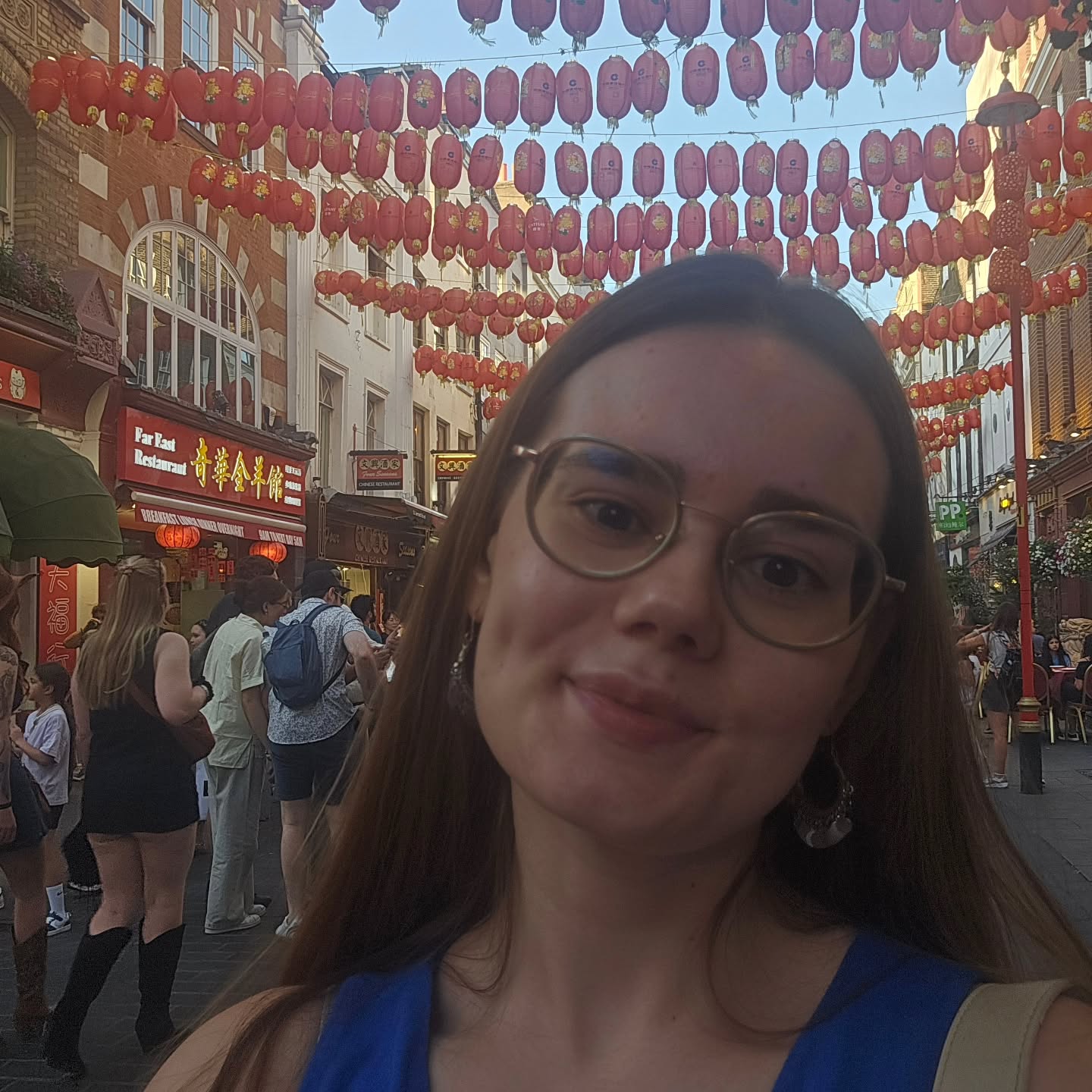
Scientific exploration knows no borders at Scorrochano Lab! We are brimming with excitement as our talented researcher Irene embarks on a high-level research stay in London, hosted in the prestigious laboratory of Dr. Pietro Fratta at the UCL Queen Square Institute of Neurology. This international experience expands Irene’s scientific horizons and places our group at the bleeding edge of RNA bioinformatics and long-read sequencing!
💡 Key Takeaways
- International Stay at UCL: Irene conducts specialized research in Pietro Fratta’s renowned London laboratory.
- Long-Read RNA Sequencing: Mastering Oxford Nanopore technologies to capture full-length transcript isoforms.
- Translational Bioinformatics: Developing advanced computational workflows to detect cryptic splicing events in ALS.
The Magic of Long-Read RNA Sequencing: Seeing the Complete Picture
To understand the transformative nature of Irene’s work, consider how gene expression operates:
DNA provides the genomic master template, while RNA serves as the active transcript directing protein production. However, through a complex process called alternative splicing, a single gene can produce dozens of different RNA transcripts (isoforms).
Conventional RNA sequencing reads short fragments (100–150 base pairs). Reconstructing full-length transcripts from tiny pieces is akin to assembling a giant jigsaw puzzle where many pieces look identical, making it nearly impossible to identify complex splicing errors.
Long-read sequencing (such as Oxford Nanopore) revolutionizes this paradigm: it sequences individual RNA molecules from start to finish in continuous single reads. This enables researchers to observe exactly how exons and introns are stitched together, effortlessly uncovering:
– Cryptic Exon Inclusion: Aberrant splicing events triggered by TDP-43 depletion in motor neurons.
– Structural Isoform Diversity: Novel transcript variants unique to specific neuron subtypes.
– Accurate Quantification: Precise measurement of disease-driving transcripts without fragmentation bias.
Why This Stay Elevates Scorrochano Lab’s Research
Irene’s stay in London represents a major leap forward for our laboratory:
– Cutting-Edge Knowledge Transfer: Irene is mastering proprietary bioinformatic pipelines and data models that she will bring directly back to Scorrochano Lab.
– Strengthening Global Collaborations: Solidifies our ongoing partnership with the UCL Queen Square Institute of Neurology, one of Europe’s undisputed epicenters of ALS research.
– Empowering Young Scientists: Provides our researchers with elite international exposure, cultivating independent, visionary investigators.
Safe Travels and Inspired Science, Irene!
Watching our researchers spread their wings and conquer international stages fills our entire team with immense pride. We eagerly await Irene’s return, equipped with the knowledge to propel our neurogenetics pipelines to new heights!
Passionate about neuroscience as much as we are?
Don’t miss any breakthrough from Scorrochano Lab! Follow us on Instagram to discover daily lab life, conference updates, and our latest scientific findings.